
Extension Cord Safety
Extension cords are a daily tool for many life safety and property protection professionals across Louisiana. Whether powering drills during a fire alarm installation, setting up temporary lighting in an attic, or running test equipment at a commercial site, extension cords often bridge the gap between permanent power and the immediate needs of the job. However, they are also a documented fire and shock hazard when misused. National fire data estimates that thousands of residential fires each year originate from extension cords, typically due to overloading, improper application, or physical damage. For licensed Louisiana installers working in homes, healthcare facilities, schools, and industrial facilities, extension cord safety is not just a best practice but a professional responsibility tied directly to OSHA compliance and your duty of care to the public.
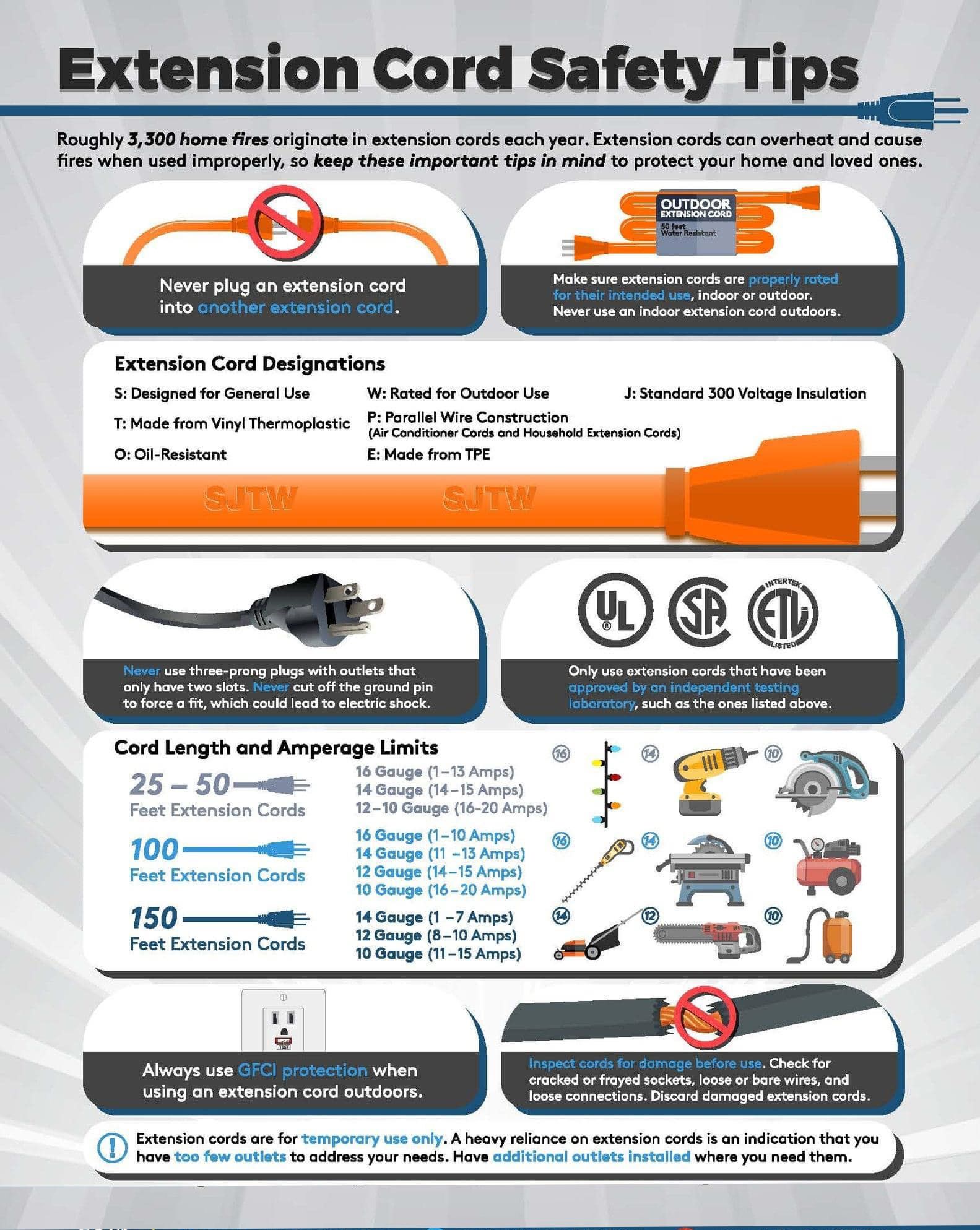
One of the most important safety principles is that extension cords are intended for temporary use only. OSHA standards under 29 CFR 1910.305 and 29 CFR 1926.405 prohibit using flexible cords as a substitute for permanent wiring. If a cord is being used repeatedly to power a workbench, alarm panel, or service area, that is an indication that permanent receptacles should be installed. This is especially relevant during extended retrofits, long-term commissioning projects, or when temporary jobsite setups begin to resemble permanent installations. If it appears permanent, OSHA will likely treat it as permanent.
Plugging one extension cord into another significantly increases resistance, heat buildup, and the potential for fire. This practice, often called “daisy-chaining,” can also result in voltage drop that affects sensitive electronic test equipment. The safer approach is to use a single cord of the proper length and appropriate gauge for the task. If additional distance is needed, obtain a properly rated longer cord rather than stacking multiple cords together.
Louisiana’s climate adds additional risk factors. High heat, humidity, and sudden rainfall require that extension cords be matched carefully to their environment. Cord markings indicate their rating. For example, “S” designates general use, “W” indicates suitability for outdoor use, “T” identifies thermoplastic insulation, “O” indicates oil resistance, and “J” reflects 300-volt insulation. A cord marked “SJTW” indicates junior service, thermoplastic insulation, and weather resistance. Outdoor-rated cords should always be used for exterior camera installations, gate operators, parking lot work, or any damp or wet environment. Using indoor-only cords outdoors can lead to insulation breakdown and increased shock hazard.
Grounding continuity is critical. Removing or cutting off the grounding prong to fit a two-slot receptacle eliminates the equipment grounding conductor and creates a serious shock hazard, particularly when working with metal enclosures, fire alarm cabinets, and intrusion panels. OSHA requires grounding continuity for cord-and-plug connected equipment. In addition, OSHA requires ground-fault protection on construction sites for temporary wiring under 29 CFR 1926.404. When working outdoors, in unfinished spaces, or in damp environments, GFCI protection must be provided either through a protected outlet or an in-line GFCI device. Given Louisiana’s moisture conditions, this protection is essential to reduce electrocution risk.
Proper gauge selection is another critical factor. The longer the cord, the heavier the gauge required to safely carry the load. Lighter 16-gauge cords are suitable only for lower-amperage tools and shorter distances. Fourteen-gauge cords support moderate loads, while twelve-gauge cords are appropriate for higher-draw equipment such as rotary hammer drills, compressors, and saws, particularly at longer distances. Using an undersized cord can cause overheating, voltage drop, and potential equipment damage, all of which increase fire risk.
OSHA also requires that flexible cords be visually inspected before use on construction sites. Cords with cracked insulation, exposed conductors, damaged plugs, missing grounding prongs, loose connections, or signs of overheating must be removed from service. Electrical tape is not an acceptable long-term repair. Damaged cords should either be properly repaired by qualified personnel or discarded. Additionally, cords should not be run through doorways or windows where they may be pinched, placed under carpets, stapled in a way that damages insulation, or positioned in walkways where they create trip hazards. Installers frequently work in occupied buildings such as hospitals and schools, and cord management must reflect the same attention to life safety as the systems being installed.
Extension cords should bear approval from an independent testing laboratory such as UL, ETL, or CSA. Using listed equipment supports compliance with recognized safety standards and aligns with the professional expectations placed on Louisiana’s licensed life safety and property protection contractors. While extension cords may seem minor compared to control panels, detectors, or access control systems, improper use can lead to shock injuries, fires, OSHA citations, and liability exposure. Temporary power practices should demonstrate the same level of professionalism and attention to code compliance as any permanent installation.
Legal and Regulatory Disclaimer
Information provided by LLSSA is for educational and informational purposes only and should not be considered legal advice or the official position of any regulatory agency or organization. Users should independently verify all information with the appropriate authorities and consult qualified legal counsel or other professionals regarding their specific circumstances.