
When the Alarm Goes Off… Will Your Contract Protect You?
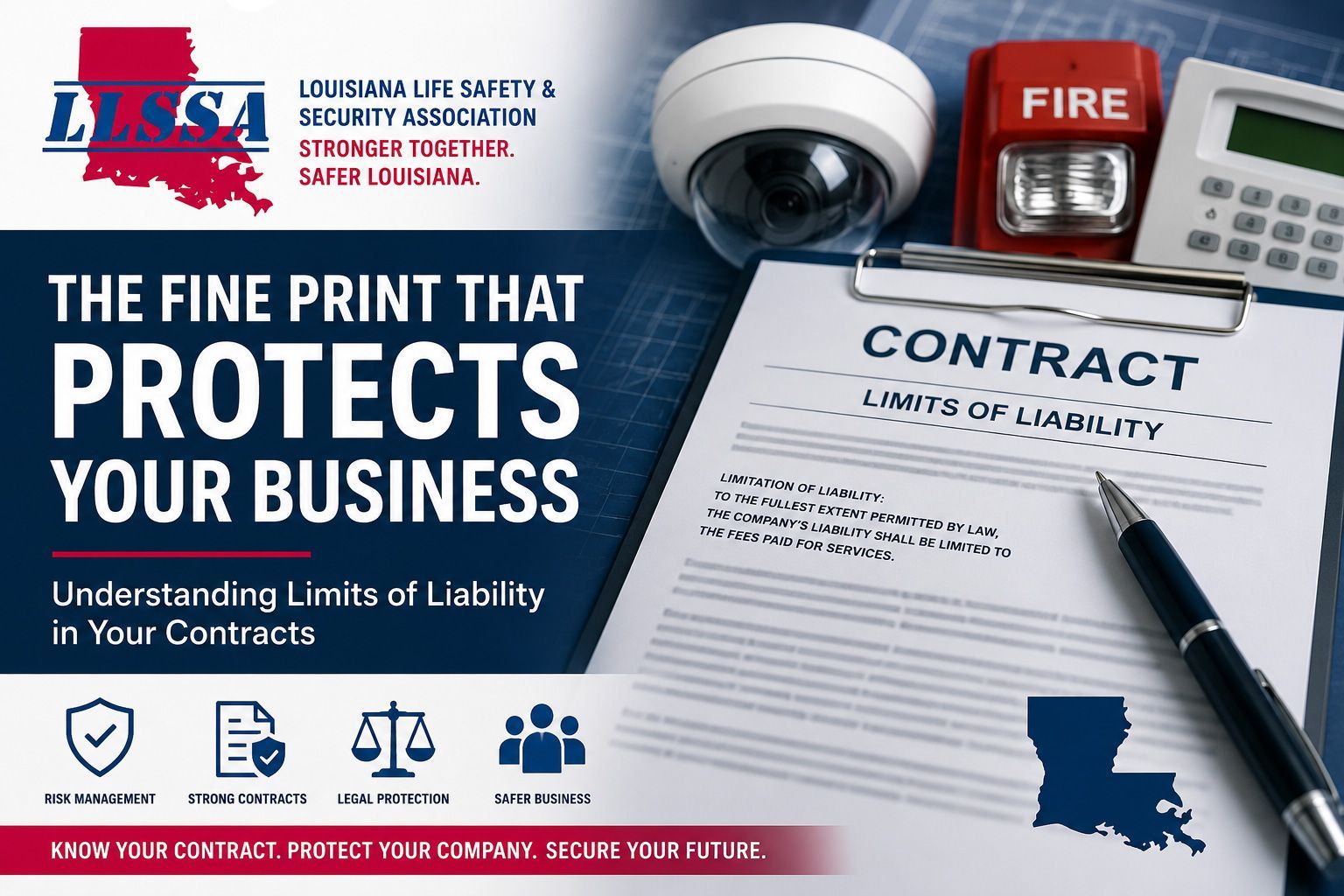
In the life safety and property protection industry, contracts are more than paperwork — they are one of the most important tools a company has to manage risk. While many alarm companies focus on pricing, scope of work, and payment terms, one of the most critical sections of any agreement is often buried deep in the document: the “limits of liability” clause. For Louisiana alarm installers, monitoring providers, locksmiths, fire alarm contractors, and integrated systems companies, understanding this section can make the difference between surviving a lawsuit and facing devastating financial exposure.
A limits of liability clause is intended to define and restrict the amount of financial responsibility a company may have if a system fails, a signal is missed, equipment malfunctions, communication paths fail, or damages occur after an incident. Alarm systems, fire alarm systems, access control systems, cameras, and monitoring services are designed to reduce risk — not guarantee that losses will never happen. Even the best-designed and best-maintained systems can be defeated by power failures, communication outages, acts of nature, improper use, criminal activity, or customer negligence. Because of this, contracts typically include language that limits damages to a specified amount, often tied to the value of the services provided.
Without these protections, a company installing a few thousand dollars’ worth of equipment could potentially face claims involving hundreds of thousands — or even millions — of dollars in damages following a burglary, fire, or other event. Plaintiffs often argue that the alarm company should bear responsibility for losses even when the system was not intended to act as an insurance policy or guarantee against every possible outcome. Properly written limitation of liability language helps establish realistic expectations between the company and the customer while reducing the risk of catastrophic claims that could threaten the survival of a business.
It is also important for Louisiana companies to understand that simply having a contract is not enough. The wording matters. Courts may interpret contract language differently depending on how clauses are written and whether they comply with state law. Certain provisions may not be enforceable if they are vague, overly broad, improperly presented, or conflict with Louisiana law. A contract downloaded from the internet or copied from another company may not provide the protections a business owner assumes it does. In some cases, older contracts may not reflect current technology, modern communication methods, updated industry practices, or evolving legal standards.
Alarm companies should also pay close attention to related provisions that often work together with limitation of liability language. These may include indemnification clauses, waiver of subrogation provisions, disclaimers of warranties, liquidated damages clauses, inspection and testing acknowledgements, force majeure language, and customer responsibilities regarding system maintenance and communication services. The interaction between these provisions can significantly impact how a claim is handled after an incident occurs.
Another common mistake is failing to use the same contract consistently across all parts of the sales and installation process. Quoted proposals, work orders, change orders, monitoring agreements, electronic signatures, and verbal promises made by sales staff can all create confusion if they conflict with the primary contract terms. Training salespeople and technicians to avoid making guarantees or statements outside the contract is just as important as the language inside the document itself.
For Louisiana life safety and property protection companies, this is also a reminder to review state laws and licensing requirements that may impact contractual obligations. Certain projects, especially those involving fire alarm systems, monitoring, and commercial installations, may carry additional legal responsibilities. Business owners should work with an attorney familiar with the electronic security and life safety industry to regularly review and update their agreements. Industry-specific legal counsel can help ensure contracts reflect current laws, address emerging technologies, and properly allocate risk in a way that protects the company while maintaining fair customer relationships.
A strong contract cannot prevent every lawsuit, but it can significantly improve a company’s ability to defend itself when disputes arise. In an industry built around protecting people and property, protecting your own business should remain a priority as well.
Legal and Regulatory Disclaimer
Information provided by LLSSA is for educational and informational purposes only and should not be considered legal advice or the official position of any regulatory agency or organization. Users should independently verify all information with the appropriate authorities and consult qualified legal counsel or other professionals regarding their specific circumstances.